
Industrial Welding Worker Needed in St. Louis, Missouri, USA
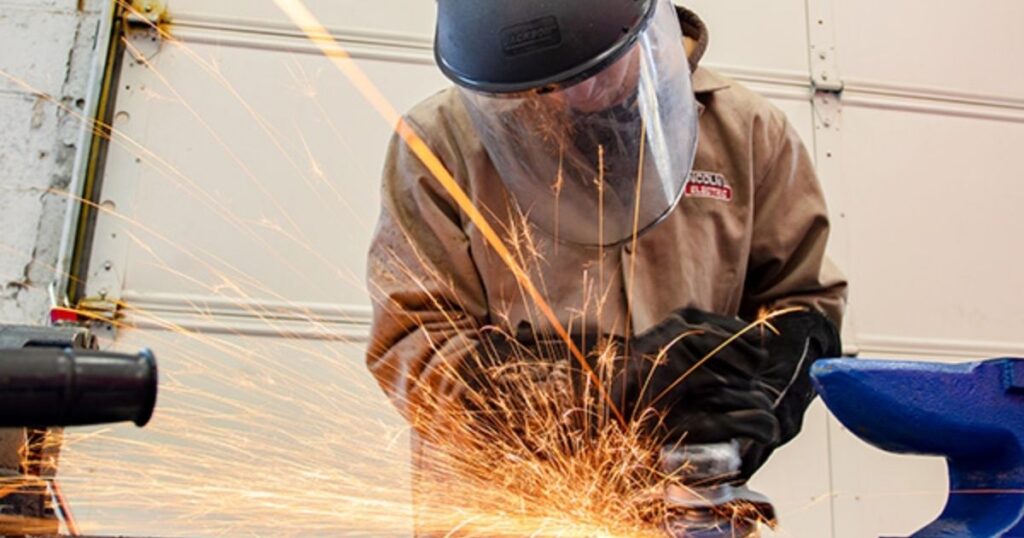
An industrial welding worker performs welding, fabrication, repair, fitting, and metal-joining operations used in manufacturing facilities, industrial equipment, machinery, structural components, piping systems, and metal-fabrication projects.
Current opportunities around St. Louis include welder/fitter, metal fabrication, steel welding, pipe welding, and industrial welding positions. For example, DIDION currently lists Welder/Fitter and Metal Fabricator openings, while a current St. Louis-area steel-welder listing seeks experienced MIG welders with heavy-steel fabrication experience.
List of Industrial Welding Worker Vacancies
Industrial Welder
An industrial welder joins and repairs metal components used in manufacturing and industrial operations.
Responsibilities can include preparing materials, positioning components, welding assemblies, inspecting welds, grinding finished areas, and maintaining welding equipment.
MIG Industrial Welder
A MIG industrial welder uses GMAW equipment to join steel and other metal components.
Responsibilities can include setting welding machines, adjusting wire-feed settings, preparing surfaces, completing welds, and inspecting finished products.
A current St. Louis-area steel-welder position specifically involves MIG welding on heavy steel components and requires blueprint reading and a weld test.
TIG Industrial Welder
A TIG welder performs controlled and precise welding on industrial components.
Responsibilities can include preparing metal, controlling the welding torch, completing weld passes, and inspecting finished joints.
Industrial Welder/Fitter
A welder/fitter combines welding with metal-fitting duties.
Responsibilities can include measuring, cutting, aligning, fitting, tack welding, and completing final welds.
A current St. Louis position for a combination pipefitter/welder requires fitting and welding skills, the ability to read isometric drawings, and an onsite weld test.
Heavy Steel Welder
A heavy-steel welder works with large steel components used in industrial manufacturing.
Responsibilities can include MIG welding, fitting, assembling steel products, interpreting blueprints, inspecting welds, and working with heavy fabricated components.
Industrial Fabrication Welder
An industrial fabrication welder prepares and joins metal components used to manufacture equipment and machinery.
Responsibilities can include cutting, fitting, welding, grinding, drilling, assembling, and inspecting fabricated parts.
Manufacturing Welder
A manufacturing welder works inside a production facility fabricating metal products and industrial equipment.
Responsibilities can include following production drawings, welding components, checking dimensions, maintaining quality standards, and using fabrication equipment.
Pipe Welder
A pipe welder joins piping components used in industrial facilities.
Current St. Louis-area listings include pipe-welding projects involving stainless-steel sanitary piping, TIG welding, and industrial equipment installation.
Structural Welder
A structural welder joins beams, plates, frames, supports, platforms, and other steel components.
Responsibilities can include fitting structural steel, tack welding, completing final welds, grinding, and inspecting finished assemblies.
Maintenance Welder
A maintenance welder performs repairs on machinery, industrial structures, frames, guards, supports, and other metal components.
Responsibilities can include identifying damaged areas, preparing metal, welding repairs, grinding, and checking repaired components.
Metal Fabrication Welder
A metal fabrication welder prepares and assembles metal components before and after welding.
Responsibilities can include measuring, cutting, drilling, grinding, fitting, welding, and finishing metal products.
Requirements
- Previous welding experience when required
- Industrial welding experience
- Knowledge of metal fabrication
- Ability to read blueprints
- Ability to interpret fabrication drawings
- Ability to understand welding symbols
- Ability to read isometric drawings when required
- Ability to measure materials accurately
- Ability to prepare metal surfaces
- Ability to perform MIG welding
- Ability to perform TIG welding when required
- Ability to perform Stick welding when required
- Ability to perform FCAW when required
- Ability to weld carbon steel
- Ability to weld stainless steel when required
- Ability to weld aluminum when required
- Ability to fit metal components
- Ability to align parts
- Ability to perform tack welding
- Ability to complete multiple weld passes
- Ability to inspect weld quality
- Ability to identify welding defects
- Ability to operate welding machines
- Ability to use grinders
- Ability to use cutting tools
- Ability to use hand tools
- Ability to use power tools
- Ability to use measuring equipment
- Ability to maintain welding equipment
- Ability to follow welding procedures
- Ability to follow safety procedures
- Ability to use required protective equipment
- Good hand-eye coordination
- Good attention to detail
- Physical stamina
- Ability to stand for extended periods
- Ability to bend and kneel
- Ability to climb ladders or scaffolding when required
- Ability to work at heights when required
- Ability to lift and carry heavy components
- Ability to work around industrial machinery
- Ability to work independently
- Ability to work as part of a fabrication team
- Ability to follow supervisor instructions
- Ability to maintain a clean work area
- Ability to maintain production quality
- Ability to work overtime when required
- Ability to work weekends when required
- Willingness to complete welding tests
Benefits
- Opportunity to gain industrial welding experience
- Development of MIG welding skills
- Development of TIG welding abilities
- Experience with heavy steel
- Exposure to stainless-steel welding
- Development of pipe-welding skills
- Development of fabrication abilities
- Experience with industrial equipment
- Development of blueprint-reading skills
- Experience interpreting welding symbols
- Development of fitting skills
- Improvement of measurement accuracy
- Experience with grinding and finishing
- Development of weld-inspection abilities
- Exposure to manufacturing environments
- Development of workplace safety awareness
- Development of teamwork skills
- Improvement of communication abilities
- Development of problem-solving skills
- Improvement of hand-eye coordination
- Development of professional discipline
- Foundation for advancement in welding and fabrication
Advantages
- Provides practical industrial-welding experience
- Develops heavy-steel welding knowledge
- Strengthens MIG welding skills
- Can develop TIG welding abilities
- Provides exposure to pipe welding
- Develops metal-fitting techniques
- Improves blueprint-reading skills
- Develops isometric-drawing interpretation
- Strengthens welding-symbol knowledge
- Improves measurement skills
- Develops grinding and finishing techniques
- Strengthens weld-inspection abilities
- Provides exposure to industrial machinery
- Develops fabrication experience
- Improves workplace safety practices
- Strengthens teamwork
- Develops communication skills
- Improves problem-solving abilities
- Provides experience with heavy metal components
- Builds experience useful for future positions as an industrial welder, MIG welder, TIG welder, pipe welder, structural welder, fabrication welder, welder/fitter, or welding supervisor
Deja una respuesta